Marrakech to Merzouga Desert Tour
A realistic guide to the route, essential stops, driving pace, desert camp and choices between three-, four- and five-day itineraries.
What you need to know
The Marrakech-to-Merzouga journey crosses a large part of southern Morocco. The classic route travels through the High Atlas, Aït Ben Haddou or Ouarzazate, Dades Valley, Todra Gorge and finally the Erg Chebbi dunes. A three-day tour is the minimum practical format, while four or five days gives you a more comfortable pace.
This is not a short transfer followed by a camel ride. The road itself is one of the main experiences: mountain passes, earthen villages, palm oases, rocky plateaus, dramatic gorges and changing desert landscapes unfold before you reach Merzouga.
How far is Marrakech from Merzouga?
The road route is long and varies according to the roads used, stops and current conditions. Attempting it in one direct day leaves little room for sightseeing and can be exhausting. Organised tours therefore divide the journey across several days and include an overnight stop around Ouarzazate, Dades or a nearby valley.
The classic route, stop by stop
1. Marrakech and the High Atlas
Leaving Marrakech, the road rises into the High Atlas. Mountain weather and road conditions can change, particularly in winter. Scenic stops are normally made along the way, but the precise timing depends on traffic and conditions.
2. Tizi n’Tichka and mountain villages
The route crosses the Tizi n’Tichka road through rugged mountain country. The bends and elevation make this a scenic but slower part of the journey. Travellers sensitive to winding roads should prepare medication in advance.
3. Aït Ben Haddou
This celebrated fortified settlement is built from earthen materials and forms part of Morocco's historic pre-Saharan architectural heritage. It has been listed as a UNESCO World Heritage property since 1987. Many tours allow time to walk through the ksar before continuing east.
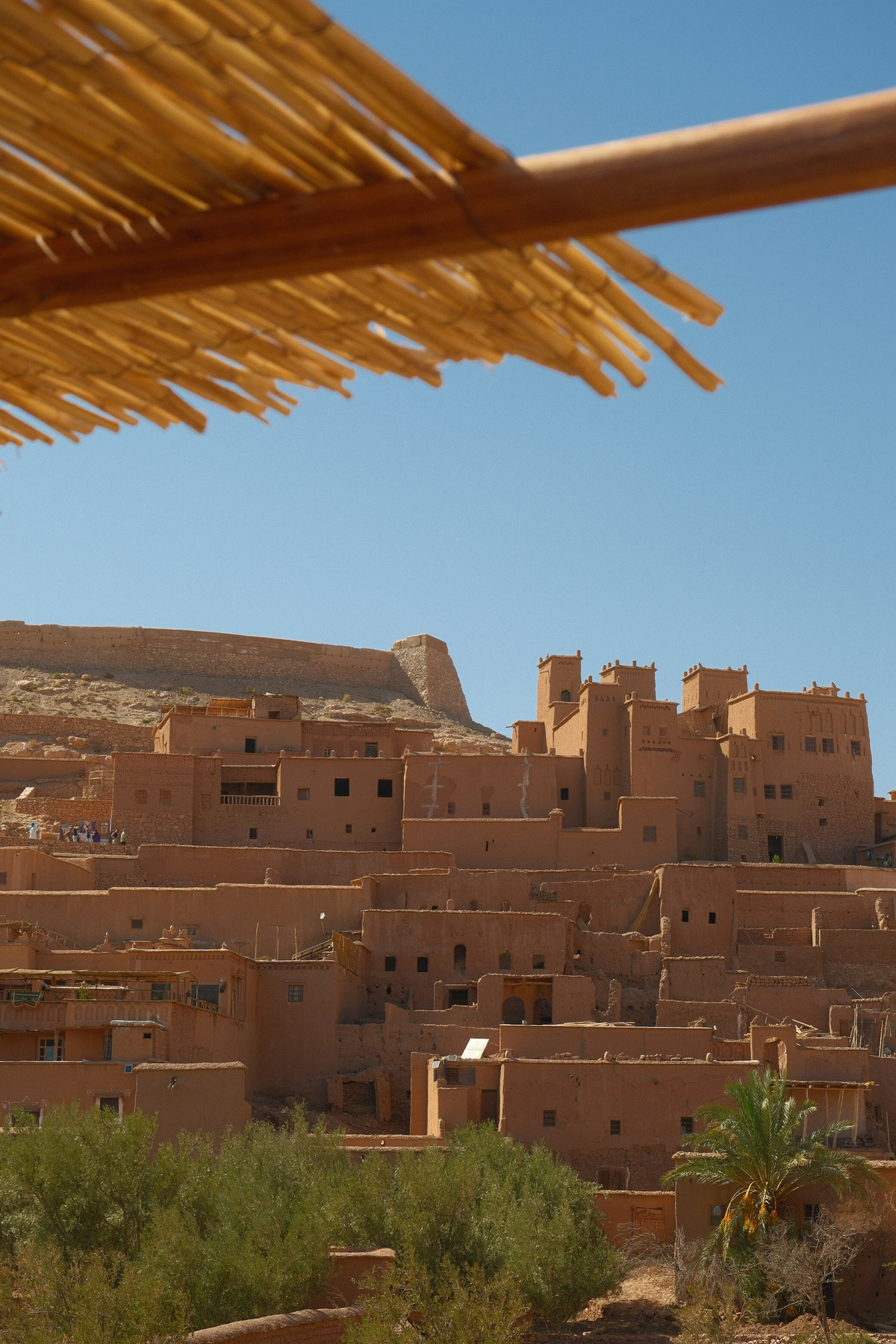
Aït Ben Haddou is a cultural highlight on many Marrakech–Merzouga itineraries.
4. Ouarzazate and the oasis routes
Ouarzazate is an important gateway between the Atlas and southeast Morocco. Depending on the itinerary, travellers may visit a kasbah or film-related attraction, then continue through Skoura and the surrounding palm landscapes.
5. Dades Valley
Many three-day tours spend the first night in or around Boumalne Dades. The valley is known for rock formations, cultivated areas, kasbah scenery and roads that wind between the mountains.
6. Todra Gorge
Near Tinghir, steep rock walls frame the Todra river corridor. Tours commonly pause for a walk, photographs and lunch in the wider area before continuing toward Erfoud and Merzouga.
7. Merzouga and Erg Chebbi
Merzouga sits at the edge of Erg Chebbi. On arrival, travellers normally transfer toward camp by camel or, when arranged, by 4×4. Sunset is weather- and arrival-dependent rather than guaranteed.
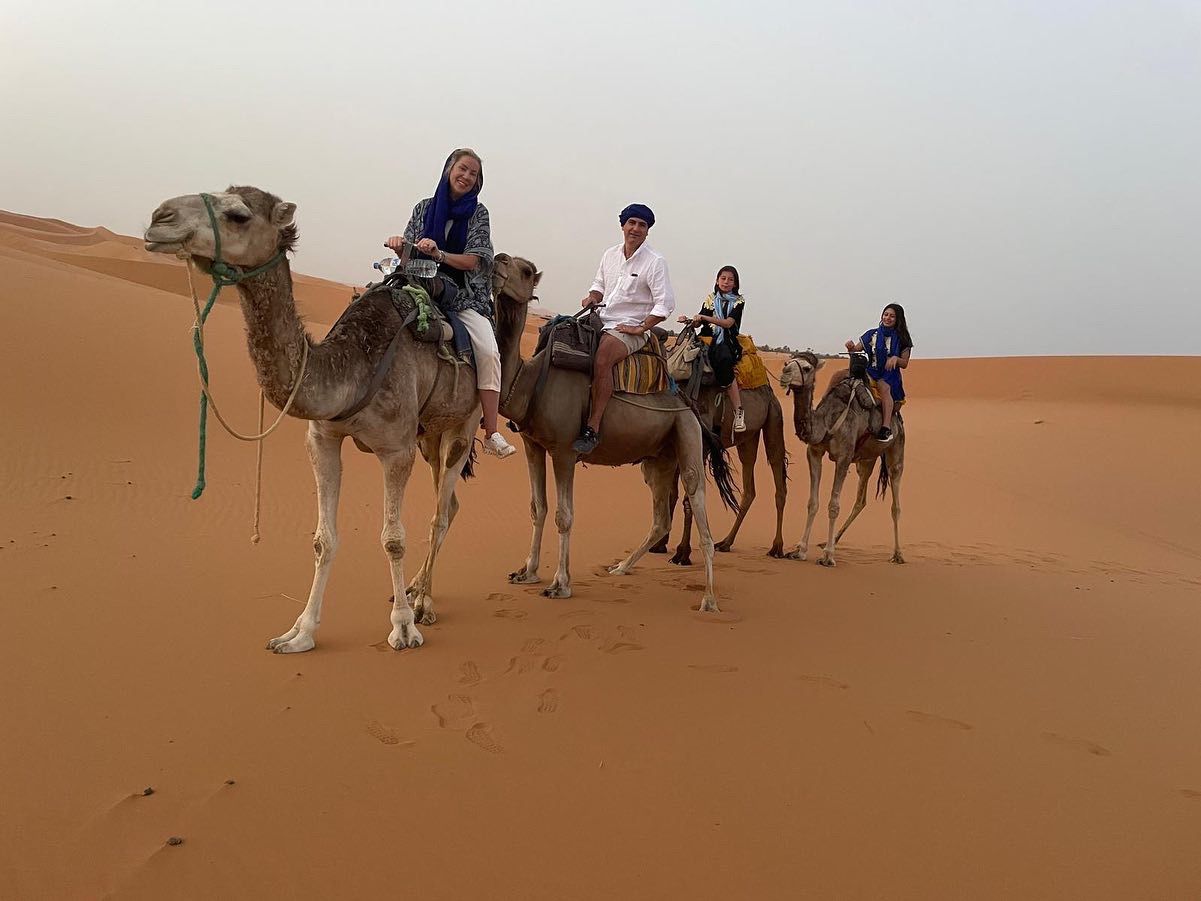
A camel trek is a popular camp transfer, but a 4×4 option may be available on request.
Three days, four days or five days?
| Tour length | Typical rhythm | Recommended for |
|---|---|---|
| 3 days / 2 nights | One night around Dades and one desert-camp night, followed by a long return to Marrakech. | Visitors with limited time who accept an intensive schedule. |
| 4 days / 3 nights | More time for Ouarzazate, the valleys or a better-paced return from Merzouga. | Couples, families and travellers who want fewer rushed stops. |
| 5 days / 4 nights | Often includes additional time around Merzouga, local villages, desert landscapes or the Draa route. | Travellers who want the desert to be a major part of the trip. |
3-Day Marrakech to Merzouga
The essential adventure through Aït Ben Haddou, Dades, Todra and Erg Chebbi.
View itinerary →4-Day Merzouga Desert Tour
A more balanced journey with extra time across southern Morocco.
View itinerary →5-Day Marrakech to Merzouga
A slower desert experience with more room for local stops and exploration.
View itinerary →Compare every Morocco tour
Browse journeys from three to thirteen days and choose the route that fits your schedule.
Explore all tours →What is the desert camp experience like?
After reaching the edge of the dunes, you travel to camp, settle into your tent and have dinner. Many camps offer music around the fire when conditions allow. Accommodation standards vary greatly: some tents use shared facilities, while others provide private bathrooms, hot water and electricity.
Before booking, ask for the camp name or category and confirm the facilities rather than relying only on the word “luxury.” Keep essential medication, warm clothing and electronics in a small overnight bag.
Best time to travel
Spring and autumn generally offer the most comfortable combination of road and desert conditions. Winter can bring pleasant sunshine but cold nights, and snow or poor weather may affect Atlas travel. Summer in the southeast can be extremely hot, so activity times and the itinerary must be adapted.
- March to May: favourable for broad touring, with variable mountain weather.
- September to November: good for desert journeys as peak summer heat eases.
- December to February: bring substantial warm layers for camp nights.
- June to August: expect strong heat and discuss safety and timing before booking.
See our month-by-month Morocco guide →
What to pack
For the road
- Water and light snacks
- Motion-sickness preparation
- Power bank and charging cable
- Comfortable layered clothing
For the dunes
- Hat, sunscreen and sunglasses
- Secure footwear
- Scarf for wind-blown sand
- Warm night layer outside summer
Private tour or shared tour?
A private tour normally offers greater flexibility for stops, departure timing and family needs, although the main driving distances remain the same. A shared tour can cost less but follows a fixed schedule and may include accommodation or camp categories chosen for the group. Always confirm vehicle size, maximum group size and exactly what is included.

Clear planning with a local guide helps match the desert itinerary to your travel pace.
Frequently asked questions
Can you travel from Marrakech to Merzouga in one day?
It is technically possible by road, but it is a very long journey and leaves no meaningful time for the major sights. Most tours divide the outward journey over two days.
Is three days enough?
Three days covers the classic highlights and a desert-camp night, but the pace is intensive. Four or five days is more comfortable.
Can the tour finish in Fes?
Yes. A Marrakech-to-Fes route through Merzouga is an efficient way to connect both cities without returning over the same road.
Is the camel ride mandatory?
No. Ask in advance whether the selected camp can provide a 4×4 transfer.
Are lunches included?
Inclusions differ between operators and itineraries. Breakfasts and dinners are commonly linked to overnight accommodation, while lunches are often paid separately. Confirm before booking.
Ready for Marrakech to Merzouga?
Tell us your dates, group size and preferred pace. We will help you choose a realistic private itinerary and explain the accommodation and camp options clearly.