Morocco Desert Tour: Merzouga & Sahara Guide
How to choose the right route, tour length and season—and what to expect from the journey across the Atlas Mountains to the dunes of Erg Chebbi.
The essential answer
A Morocco desert tour to Merzouga is a road journey as well as a Sahara experience. From Marrakech, the classic route crosses the High Atlas and passes Aït Ben Haddou, Ouarzazate, the valleys and Todra Gorge before reaching Erg Chebbi. From Fes, travellers commonly cross the Middle Atlas and Ziz Valley. Three days is the practical minimum; four or five days provides a more relaxed experience.
Merzouga lies beside Erg Chebbi, one of Morocco's best-known dune landscapes. A typical tour combines scenic drives, Amazigh villages, kasbahs, gorges, a camel trek and a night in a desert camp. The exact stops and activities depend on the route, weather, daylight and tour duration.
Merzouga, Erg Chebbi and the Sahara
People often use “Merzouga Desert” and “Sahara Desert” interchangeably, but Merzouga is the village at the edge of the Erg Chebbi dunes. An erg is a large area of wind-shaped sand dunes. The wider southeast also includes rocky plateaus, palm oases, dry valleys and small settlements—so the journey reveals much more than sand.
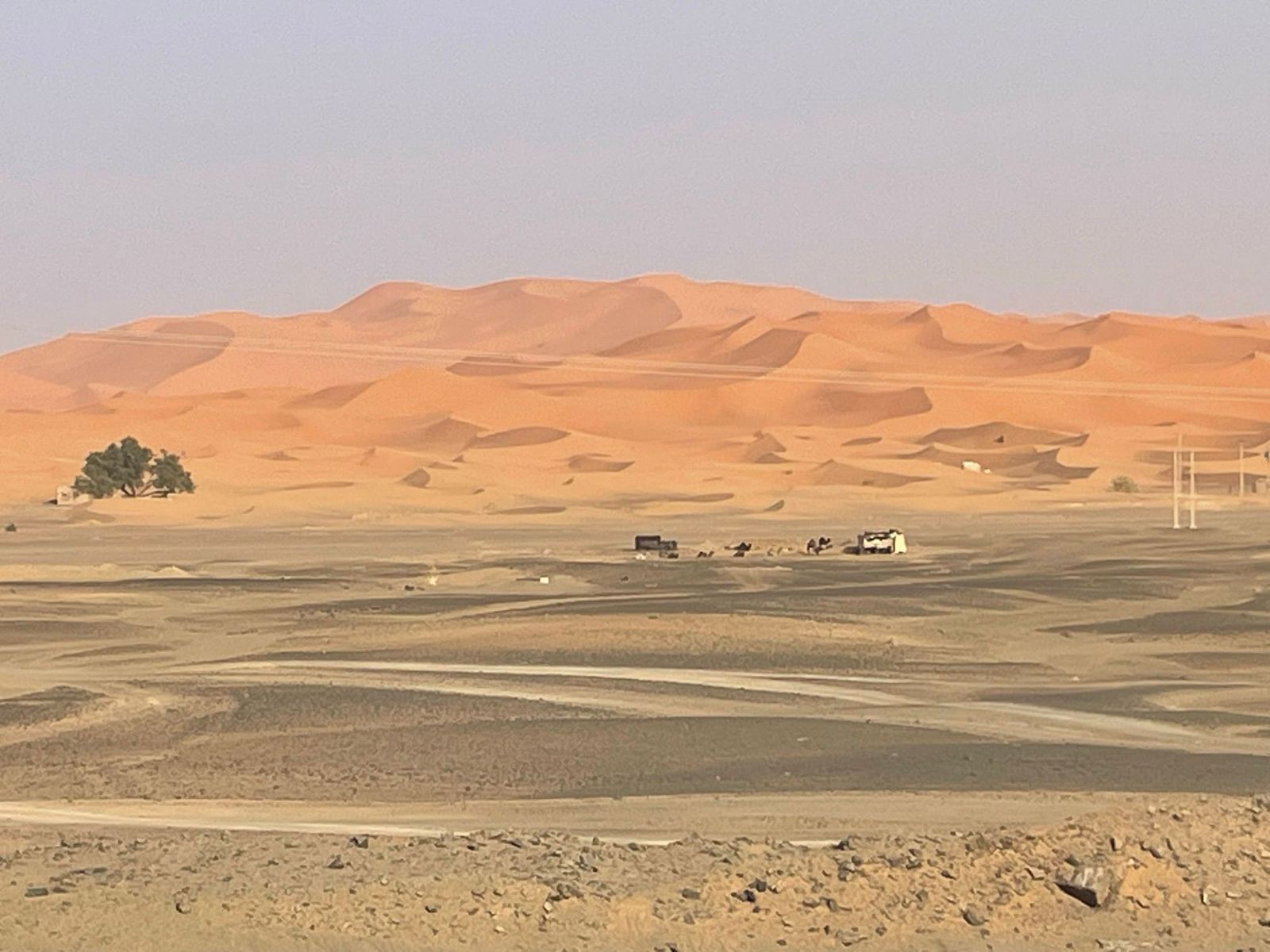
A desert tour includes changing mountain, valley, oasis and dune landscapes.
Should you start from Marrakech or Fes?
From Marrakech
This is the classic southern route. It usually crosses the High Atlas via the Tizi n'Tichka road, then continues through Aït Ben Haddou or Ouarzazate, the Dades region and Todra Gorge before Merzouga.
Choose it for: kasbahs, cinematic landscapes, High Atlas scenery and southern valleys.
See the 3-day Marrakech tour →From Fes
The Fes route normally travels south through the Middle Atlas, with landscapes around Ifrane, cedar country, Midelt and the Ziz Valley before reaching the desert.
Choose it for: a north-to-south journey or a one-way route that finishes in Marrakech.
See the Fes–Marrakech tour →What happens on a desert tour?
Cross the mountains
The journey begins with changing elevations and mountain roads. Stops are normally made for views, meals and important sites rather than driving without a break.
Explore kasbahs and valleys
Depending on the itinerary, stops may include Aït Ben Haddou, Ouarzazate, Skoura, the Rose Valley, Dades Valley or Todra Gorge.
Reach Merzouga
Near the dunes, travellers prepare for the camp transfer. Luggage arrangements vary, so keep essential overnight items in a small bag.
Enter the dunes
A camel trek is the traditional option, while some arrangements use a 4×4 transfer. Sunset timing depends on arrival, weather and season.
Stay at a desert camp
Camps usually include dinner, accommodation and breakfast. Comfort levels differ, so confirm whether the tent has a private bathroom, electricity and the bedding you expect.
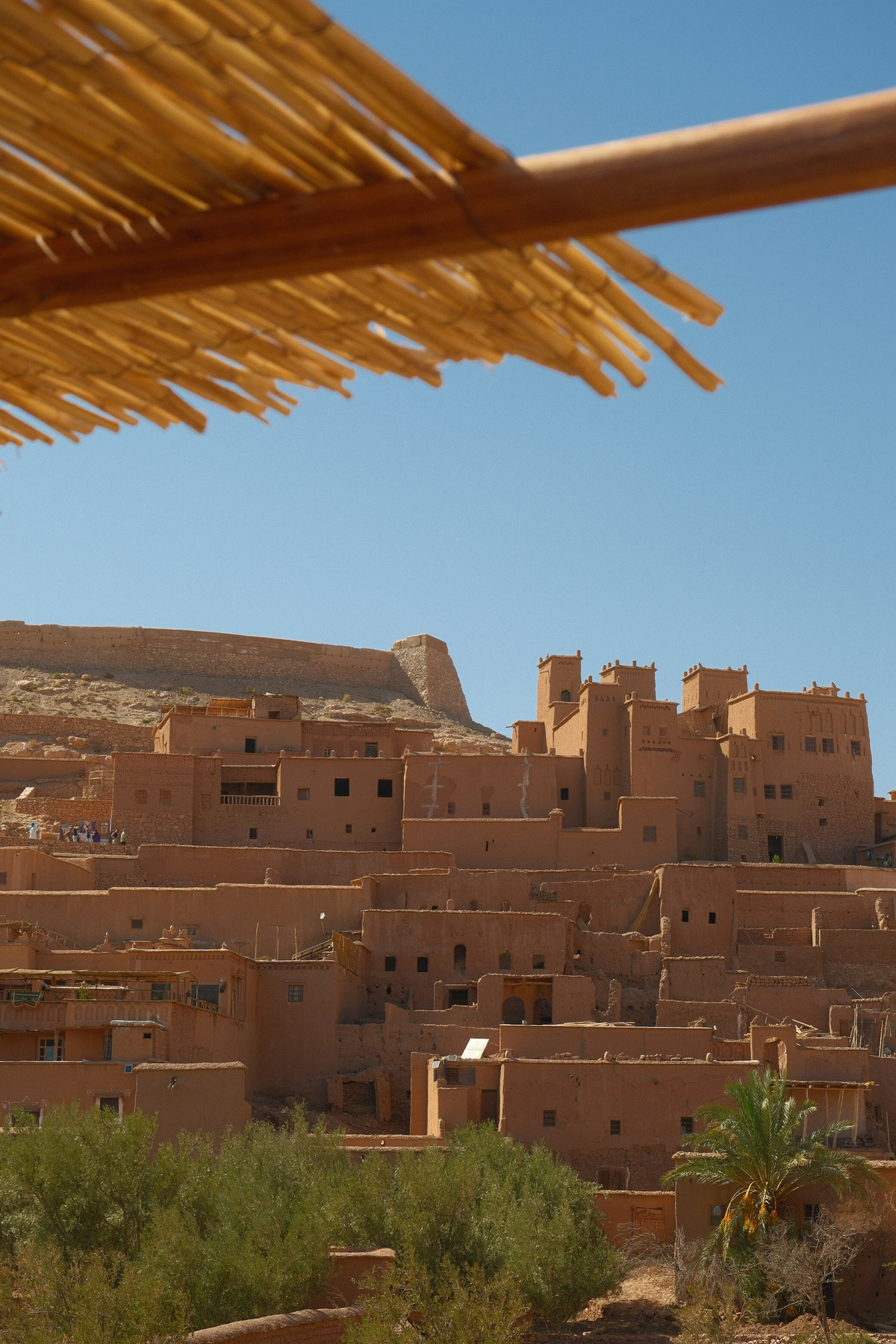
Aït Ben Haddou is a major cultural stop on many Marrakech-to-Merzouga routes.
How many days should you choose?
| Duration | Best for | What to understand |
|---|---|---|
| 3 days | Travellers with limited time who want the essential route and one desert-camp experience. | The schedule involves long road sections and relatively little free time in Merzouga. |
| 4 days | A better-paced Marrakech return trip with additional stops or more time in the southeast. | Offers more breathing room than the three-day format. |
| 5 days | Travellers who want to explore the Merzouga area, meet local communities or spend more time around the dunes. | Usually allows a fuller desert day and a less compressed return. |
| 7–10 days | A broader Morocco circuit combining the Sahara with imperial cities, Chefchaouen, the coast or other regions. | Best when the desert is one part of a complete Morocco journey. |
Prefer a faster adventure?
Our three-day itinerary covers the High Atlas, Dades area, Todra Gorge and Merzouga before returning to Marrakech.
View 3-day tour →Prefer a slower journey?
Browse our complete collection and choose a four-, five- or multi-day itinerary built around your available time.
Compare all tours →Best time for a Morocco desert tour
Spring and autumn generally offer the most balanced conditions for road travel and time in the dunes. Winter can provide clear, comfortable days, but desert nights may be very cold. Summer temperatures in southeastern Morocco can be extreme, so itineraries need earlier starts, shade, hydration and realistic activity levels.
- March–May: popular for comfortable touring, although weather can change.
- September–November: usually suitable as the strongest summer heat eases.
- December–February: pack warm layers for early mornings, evenings and camp nights.
- June–August: only choose demanding desert activities with careful heat planning.
Read our complete Morocco seasonal guide →
What to pack for Merzouga
- Breathable, modest clothing and layers suitable for the season.
- A warm jacket outside summer, especially for winter camp nights.
- Closed walking shoes or secure sandals for camp and dune areas.
- Sun protection: hat, sunglasses and sunscreen.
- A small overnight bag, personal medication and a reusable water bottle.
- A scarf or light face covering for wind-blown sand.
- Power bank and protective pouch for electronics.

Local guidance helps travellers understand the landscapes, communities and practical rhythm of the route.
Questions to ask before booking
What is included?
Confirm accommodation, breakfasts, dinners, camel or 4×4 transfer, entrance fees, local guides and lunch arrangements.
Private or shared?
Ask about vehicle type, group size, luggage space, air conditioning and whether stops can be adjusted.
Which camp category?
“Luxury” is not a universal standard. Ask specifically about private bathrooms, hot water, bedding and electricity.
How much driving?
Merzouga is far from Marrakech and Fes. Request the daily route and understand that a three-day trip is necessarily intensive.
Responsible desert travel
Carry out your waste, use water carefully, respect village privacy and follow your guide around dunes and fragile desert terrain. If riding a camel, look for animals that appear healthy and calmly handled. Travellers who do not wish to ride can ask whether a 4×4 camp transfer is available.
Frequently asked questions
Is a three-day Marrakech desert tour long enough?
It is enough for the classic route and one camp night, but it includes substantial driving. Four or five days is better for travellers who prefer a slower pace.
Can I finish the tour in Fes instead of Marrakech?
Yes. Marrakech-to-Fes and Fes-to-Marrakech routes are popular because they connect the two cities through Merzouga without repeating the same road.
Do desert camps have bathrooms?
Some tents include private bathrooms and others use shared facilities. Confirm the exact camp category before booking.
Is camel trekking compulsory?
No. Depending on the camp and route, a 4×4 transfer may be possible. Request this option before departure.
Is the desert tour suitable for children?
Many families take desert tours, but the long drives, heat and cold nights require age-appropriate planning. Discuss your children's ages and needs before confirming.
Plan your private Morocco desert tour
Tell us your dates, starting city, finishing city and preferred pace. We will help you choose a realistic itinerary for Merzouga and the Sahara.